

Description
1. Material: base material is low carbon steel (carbon content ≤ 0.25%), common grades Q235A / B, Q195, part of the 20 # steel (fluid transport scenarios); plating is pure zinc, the base material to ensure the strength of the pipe and weldability, plating to enhance corrosion resistance.
2. zinc layer thickness: hot galvanized pipe (inner wall ≥ 40μm, outer wall ≥ 60μm, corresponding to the weight of the zinc layer inner wall ≥ 280g / m², outer wall ≥ 420g / m²); cold galvanized pipe (zinc layer is thin, usually 5-15μm, corrosion resistance is weaker than the hot-dip galvanized), cold galvanized pipe is now more restricted use.
3. Standards: GB/T 3091 (welded galvanised steel pipe for low-pressure fluid transport), GB/T 13793 (straight-seam welded steel pipe, including galvanised type); international standard ISO 1461, American Standard ASTM A53.
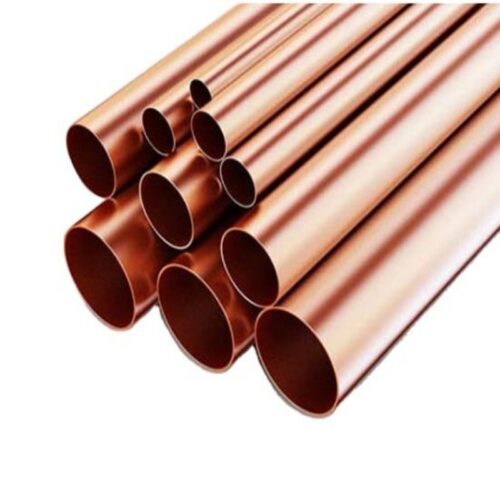
4. Dimensions: Outside diameter 13.5mm-219mm (commonly used DN15-DN150, such as DN20 corresponds to the outside diameter of 26.9mm); wall thickness of 1.8mm-6.0mm; the length of 4-9m, support for the fixed size.
5. Processing: Base material processing (steel strip coil → welding → straightening → cutting) → pre-treatment (pickling and rust removal → cleaning → plating) → hot-dip galvanising (high-temperature zinc dipping to form zinc-iron alloy layer) → post-processing (passivation → cooling → hydrostatic testing).
6. Applicable industries: construction (water supply and drainage pipes, fire-fighting pipelines), municipal (water supply and low-pressure gas pipelines), agriculture (irrigation pipelines), light industry (equipment cooling water pipes, instrumentation pipelines).